

If you are injured on someone else’s property, and wonder if you might have a premises liability claim, the first thing to determine is if the property owner owed you a duty of care.
The duty of care is the obligation the property owner has to people who visit their property, and the kind of duty they have depends on the type of visitor.
To win a premises liability case based on negligence in Pennsylvania, visitors must prove that they were owed a duty of care at the time they were injured.
There are three main categories of individuals who enter land: a trespasser, a licensee, and an invitee.
It is not always clear which category a visitor falls into, so if you have been injured on someone else’s property, contact us, and we can assist you with your particular situation.
Trespasser
A trespasser is a person who does not have permission to be on the premises. With most trespassers, the owner does not owe a duty of care to make the premises reasonably safe, but a property owner can’t intentionally inflict injury on a trespasser.
However, if the property owner has something called an “attractive nuisance,” they have a duty to secure that nuisance. An attractive nuisance is something that would interest children, like a swimming pool. If a property owner has a swimming pool, they should fence it in, so that kids don’t fall in it.
Children are owed a higher duty of care, regardless of whether they are considered trespassers.
Even if you are deemed a trespasser, you may still be able to make a claim against the property owner. Conversely, if someone on your property is deemed a trespasser, you could still be liable for their injuries.
Licensee
A licensee has implied or express permission to be on a landowner’s property, like a social guest or a delivery person. Implied permission means the person is engaging in conduct they would reasonably believe would allow them on the property.
A property owner owes a higher duty of care to a licensee than to a trespasser. A property owner has the duty to warn licensees of dangers he or she knows about or should know about. For instance, if a property owner is hosting a party and knows there is a hole in the ground that guests could trip over, he or she has a duty to warn guests.
Ignorance does not excuse a property owner from this duty. If a reasonable property owner would have noticed the issue during an inspection, then even if that particular owner did not know about the danger, they will be held responsible for any injuries it caused. Similarly, if the property owner created the danger, they will be held accountable.
Invitee
The highest duty of care is owed to an invitee. An invitee is either a public invitee or business visitor. A business visitor is a person that has been invited on the premises for the purpose of conducting a business the landowner is in, like a customer at a store. Public invitees are people who visit the property for purposes for which the property is available to the public, like a museum visitor.
The owner of such public and business properties must maintain the property in a reasonably safe condition. If they fail to do so, they may be liable for the visitor’s injuries.
Negligence
Once you determine that the property owner owed you a duty of care, you will still have to demonstrate that they breached that duty, that the breach caused your injury, and that you suffered damages as a result.
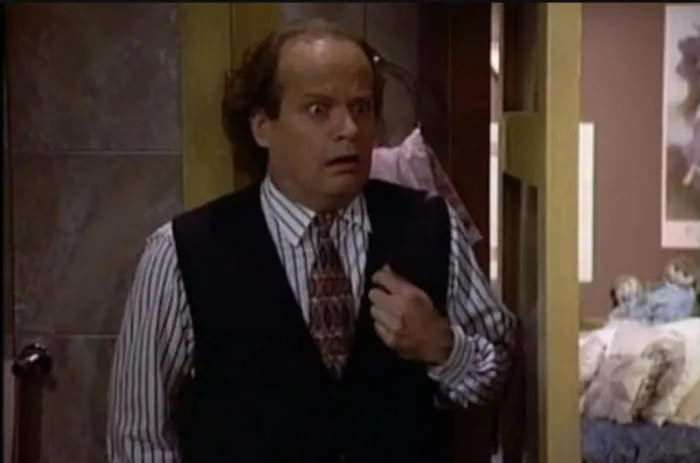
Let’s look at an episode of the classic TV show “Frasier” for an example.
In this episode, called The Ann Who Came to Dinner, Frasier learns that his father forgot to mail out the payment for his home insurance premium (back in the days when we still mailed actual checks to companies.) Because his insurance has lapsed, he needs a new policy. He calls a woman he once dated who is an insurance agent, and asks her to come to his house to discuss a new policy. In the show, she has come to inspect the home before writing up the policy. (This is not common practice, but for purposes of the example, let’s go with it.)
Just before Ann had arrived, Frasier found his dad in the kitchen, eating a sandwich, and said to him, “Think you can get a plate before you start dripping mayonnaise all over the place?”
Ann arrives, and there is some awkwardness because Frasier had been rude to her on a date several years prior.
Frasier: Can I get you something to drink?
Ann: Oh, just a glass of water. But I’ll get it, I want to see your kitchen.
[She steps into the kitchen, but keeps talking.]
Ann: Wow! Shmancy! And so clean. . . . Whoops, spoke too soon. Somebody dripped a little bit of mayona…
[She lets out a screech and there is a thud from the kitchen. Frasier looks towards the kitchen nervously.]
Ann had fallen and broken her leg. Frasier is not currently insured, so the rest of the episode shows Frasier’s hijinks in trying to avoid a lawsuit.
Would Ann have a valid claim if she decided to sue?
As with any premises liability claim, first we need to determine if the property owner (Frasier) had a duty of care.
Ann was not a trespasser, because Frasier had invited her to his home. And though she was invited, as it’s not a public space or a business, Ann is not an “invitee.” She is a licensee: she has express permission to be on the property.
Because Ann was a licensee, Frasier had a duty to warn her of dangerous conditions on the property that create an unreasonable risk of harm if he knew about the condition and it was not likely to be discovered by the licensee.
In this case, it’s not clear that Frasier knew about the mayo on the floor, but it could be argued that he should have known. He saw his dad dripping mayonnaise, he could have checked the floor.
However, does Ann share some of the blame? By what she said, we know that she observed the mayo before she slipped on it. There is an argument that she observed it and walked over it anyway. In that case, was the cause of her injury Frasier’s negligence or her own negligence?
Does a little bit of mayo on the floor cause an unreasonable risk of harm?
The answers to these types of questions are complex. Contact Aversa & Linn to learn more about the duty of care and how it may apply in your case.
