


In Pennsylvania, you may be able to recover damages in a premises liability claim for medical bills, lost wages or loss of future earning capacity, and non-economic damages like pain and suffering, and loss of consortium.
A lawsuit’s goal is to compensate the plaintiff with a monetary award or settlement so that the plaintiff is restored to their condition before the injuries/accident took place. Plaintiffs make claims for both economic damages (for example, plaintiff missed time from work and lost income) and non-economic damages (plaintiff experienced pain and suffering).
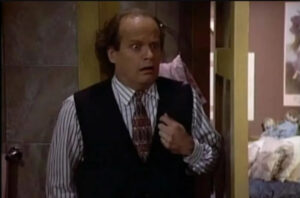
In an episode of Frasier, an insurance adjuster named Ann visits Frasier’s home, falls and breaks her leg, making her unable to live in her apartment temporarily. Frasier reluctantly invites her to live with him while she recovers. She thinks it will take a month to heal. Let’s see what type of damages she may be awarded in a personal injury claim.
Medical expenses
Plaintiffs can be compensated for the out-of-pocket doctor bills and other medical expenses (hospital stays, therapy, tests) that have already been incurred as well as those expenses the plaintiff will need to pay in the future because of their injuries. In cases involving serious injuries, the plaintiff may need a lifetime of medical care resulting in a lifetime of medical expenses. All of those expenses should be paid by the defendant even if they won’t be incurred until years later.
The woman from Frasier could be reimbursed for all of these expenses: those she already incurred such as doctor bills, hospital stays, therapy, tests and those she will incur as a result of the injury.
Lost Income
Like medical expenses, damages for lost income are claimed for both past periods and the future. The plaintiff must be compensated for lost wages or income from missed workdays–even if paid vacation or sick days were used–because of his injuries and the medical treatment that followed.
Whether the plaintiff is a salaried employee, works for tips, or is self-employed, they can make a claim for lost income. The lost income will need to be documented, usually by a tax return or pay stub. In addition, the employer typically verifies the amount of time missed due to injury and to the employee’s rate of pay.
It’s not clear on Frasier if Ann is able to work while she heals or not. If she is not able to work, she would need to provide evidence of that, as well as documentation of her income.
Loss of future income
If the plaintiff is temporarily or permanently disabled from working in the future because of their injuries, the plaintiff is also entitled to those lost future earnings.
In some cases, where the injury doesn’t fully heal, the situation is more complicated – the plaintiff can still work, but because of their injuries, can no longer perform the same job they did before the defendant caused them harm. If the plaintiff cannot earn as much money as before their injury, then the defendant is responsible for compensating the plaintiff for the difference in earnings between their current lower-paying job and the prior higher-paying job.
In Frasier, there is no reason to think Ann won’t be able to return to her job after her leg heals. But if for some reason, her injury prevents her from returning to her job, or earning as much money as she did before, the defendant would be responsible for the difference in earning.
Non-economic damages
Non-economic damages are much harder to calculate than economic damages because they are designed to compensate a plaintiff for the non-monetary toll that the defendant’s harms have caused on their life. Non-economic damages include pain and suffering, embarrassment and humiliation, loss of life’s pleasures and, in some cases, disfigurement, for both the past and the future.
In analyzing the claim of Ann on Frasier, she could claim embarrassment and humiliation from having to live in someone else’s home while she recovers, as well as loss of life’s pleasures that come with being confined to a home. These are factors that would be considered when analyzing the worth of her claim.
Loss of consortium
Loss of consortium damages compensate an uninjured spouse for the harm done to their day-to-day relationship with the injured spouse. A loss of consortium claim isn’t brought as a separate lawsuit–the uninjured spouse joins the lawsuit brought by the injured spouse. In Pennsylvania, only an uninjured spouse can make a claim for loss of consortium (an unmarried plaintiff cannot be joined in a lawsuit by a significant other, even if the relationship with the non-spouse has suffered harm).
The injured character on Frasier was not married. So no one would be able to claim loss of consortium in this case.
At Aversa & Linn, we always seek damages to compensate our clients for ALL of the harms caused by the defendant and we will always make sure that the full extent of your injuries is fully understood by the defendant’s lawyers and any judge or jury that hears your case.
Contact Aversa & Linn for help in evaluating how much your claim may be worth.
